
Checking Criminal History in Ashland
Begin by identifying the responding agency. Ashland maintains part-time police staffing and also receives Cass County Sheriff coverage. A village officer's report belongs with Ashland, while a deputy's report belongs with the sheriff. The Cass County Circuit Clerk holds any filed prosecution. An outside facility holds booking data, and Illinois State Police, or ISP, holds state repository records. No single Ashland database combines all four.
- Call Ashland Police at (217) 476-8191 or Village Hall at (217) 476-3317 to confirm whether a village officer created the report.
- If a deputy responded, contact the Cass County Sheriff at (217) 452-7718 for the sheriff-created file.
- Submit a written request with the date, time, location, record type, incident number, contact details, and desired format.
- Search Cass County on Judici for a filed ordinance, traffic, misdemeanor, or felony case.
- Use CHIRP for public Illinois conviction information or ISP Access and Review when examining your own fuller state record.
Keep the incident and case numbers. They distinguish people with similar names and make it easier to follow the record from village enforcement to county court.
Record each office contacted, the date, and the wording used. A name-only request can pull the wrong person, while an incident number or case number ties the search to one event. If the response is incomplete, compare the missing item with the custody chain before sending the same broad request again. Ashland Police cannot supply a sheriff report, the sheriff cannot certify a Circuit Court disposition, and the clerk cannot create a booking record held by an outside jail.
Ashland's Part-Time Police Model
The official Ashland police page says the village maintains a part-time Police Chief and part-time deputy and is also covered by Cass County Sheriff. It lists part-time officer Jim French. Published duties include traffic enforcement, animal control, and code enforcement. This model affects record custody more than public access rights: the office whose officer handled the call keeps the first report.
The official police page supplied the view below.
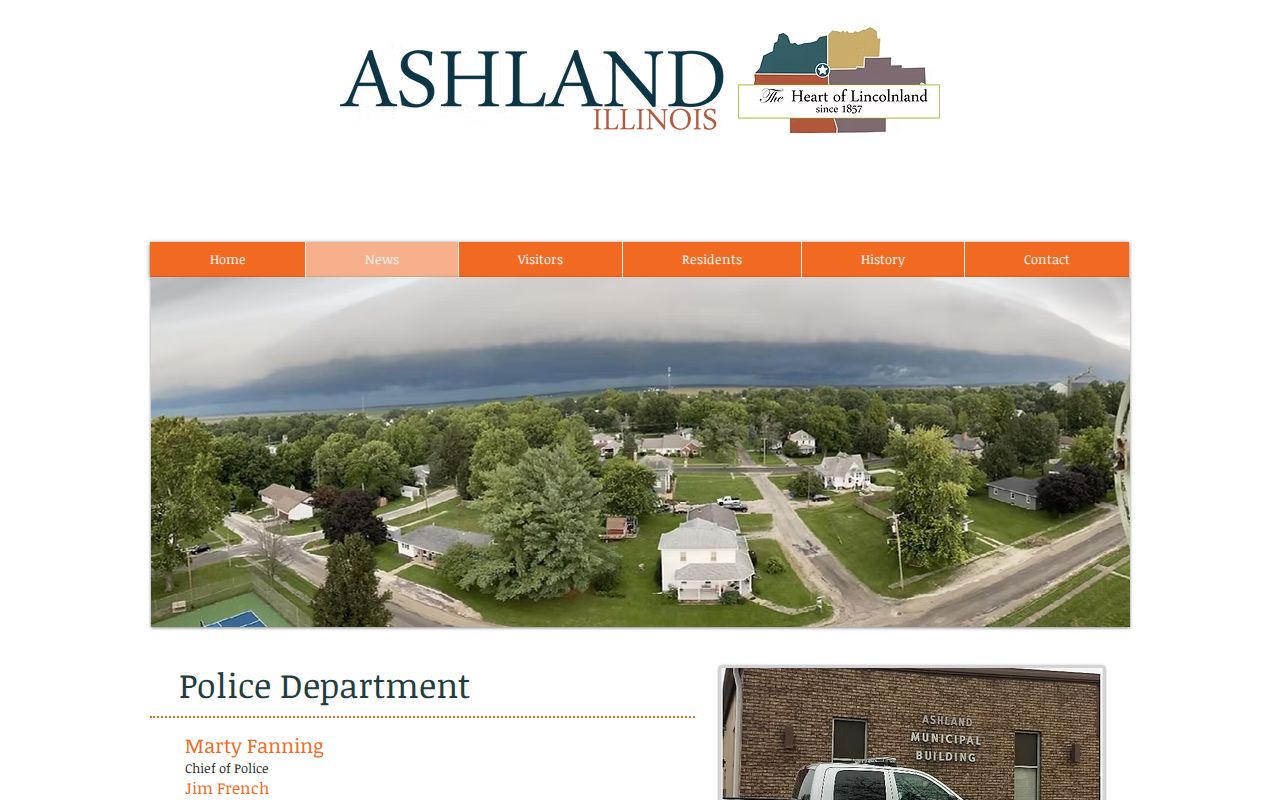
The page provides staffing, duties, address, and phone information, but no arrest blotter, police app, report-order portal, downloadable FOIA form, fee schedule, or records hours. Use its contact details as the fallback.
Ashland Police Department Records
Ashland Police creates incident, traffic, code-enforcement, animal-control, and arrest records for work done by village personnel. The office is listed at 101 N. Yates Street, Ashland, IL 62612. Police can be reached at (217) 476-8191, Village Hall at (217) 476-3317, and the village at ashland@casscomm.com. Confirm the correct delivery method and counter availability before sending private details or traveling.
No police-specific request form was found. A useful written request identifies the requester, contact route, record type, date, time, location, incident number if known, and preferred medium. Ask for existing records rather than answers to questions. The village may redact victim data, minor information, confidential sources, private identifiers, or active-investigation material when Illinois law permits it.
Requesting the Right Ashland Report
The shared-coverage arrangement creates a common mistake: sending every Ashland request to Village Hall. First ask which agency responded. A village report stays with Ashland. A deputy report goes to the Cass County Sheriff at 101 N. Front Street in Virginia. A joint response can produce records in both offices, and each custodian may hold a different part.
| Event | First source | Next check |
|---|---|---|
| Village officer response | Ashland Police or Village Hall | Circuit Clerk if charges were filed |
| Sheriff deputy response | Cass County Sheriff | Receiving jail and Circuit Clerk |
| Traffic or ordinance citation | Issuing agency | Judici or Circuit Clerk |
State the event date and place in both requests if agency responsibility remains unclear. That is more reliable than asking one office to search another office's files.
Ashland Arrests and Bookings
Ashland has no documented holding facility, and Cass County has no jail. A person arrested by village police or a deputy may be transferred to an outside detention facility. The arresting agency can identify that destination. The receiving jail, not Ashland or Cass County, creates the booking file and holds current custody, intake, fingerprint, photograph, and release data.
No official Ashland arrest blotter or Cass booking roster was found. Call the arresting agency, then the receiving facility. Search Judici only for charges filed in Circuit Court. A booking entry may appear before a court case, while a court dismissal may appear after older arrest data was sent elsewhere. The Cass County arrest lookup gives the county-wide transfer chain.
Outside-Jail Routing After Ashland Arrests
The Illinois Sheriffs' Association Cass directory confirms that the county has no jail. Its official view appears below.
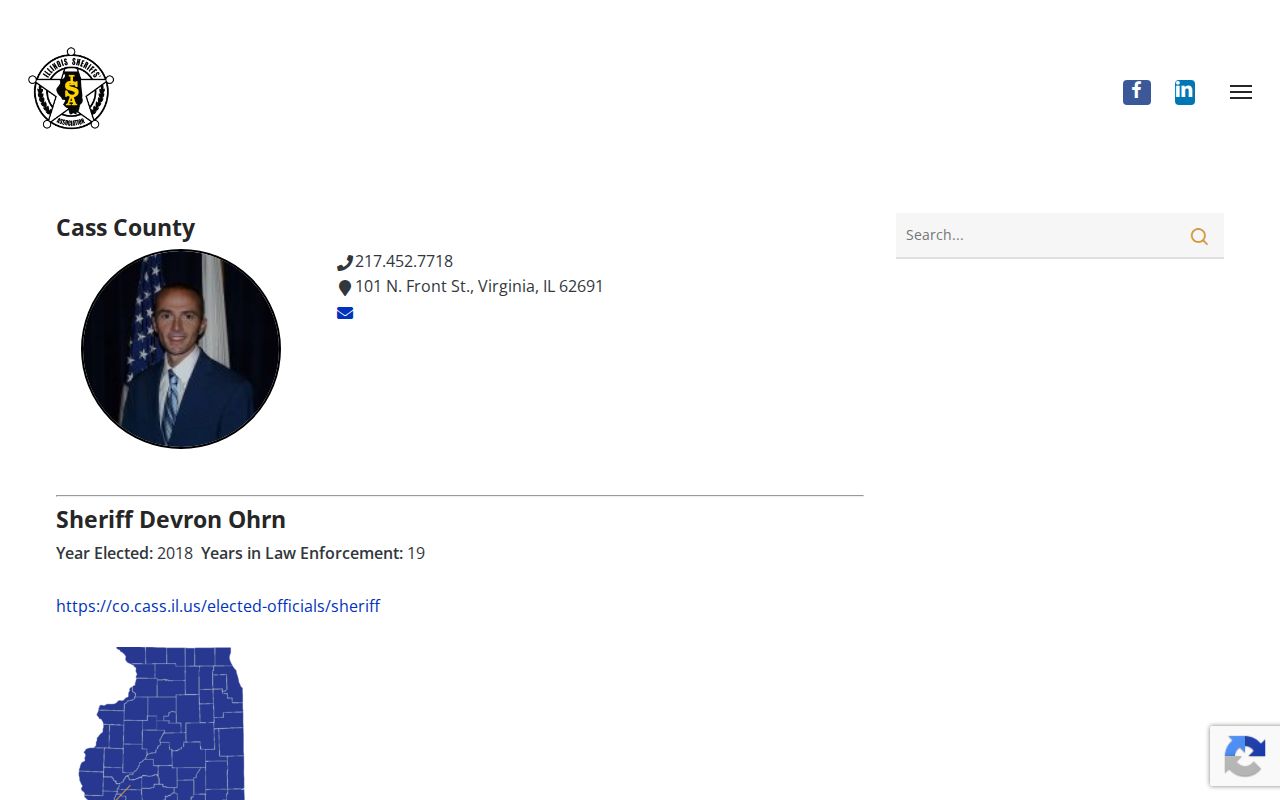
The no-jail listing explains why a search for an Ashland booking cannot stop at the county website. Ask for the facility name, transfer date, and booking identifier. Then contact that facility directly. Do not infer release merely because Cass County has no roster.
Custody can change again after a court order or sentence. IDOC Individual in Custody Search covers state correctional custody, fugitives, and parole-related results, but it does not replace a local receiving-jail inquiry for a recent arrest.
Municipal Court Records in Ashland
Ashland has no standalone municipal court database. Village citations and criminal charges that reach court go to Cass County Circuit Court in Virginia. The Circuit Clerk expressly directs readers to Judici's Cass County search for computer-indexed cases from 1998 forward. Older matters remain in book indexes at the clerk's office.
| Court Name | Cass County Circuit Court, Eighth Judicial Circuit |
|---|---|
| Case Types Heard | Village ordinance, traffic, misdemeanor, felony, and other state-law matters |
| Case Lookup Channel | Judici for 1998-forward indexes; clerk terminal, counter, or mail for other public records |
| What the Docket Shows | Case number, parties, charges, events, disposition, and sentence entries when public |
| Copies & Fees | Confirm copy and certification charges with the Circuit Clerk |
From Ashland Citation to Judici
A citation starts with the issuing officer, not with an Ashland court. If the matter is filed, the Cass County State's Attorney prosecutes applicable local and state charges in Circuit Court. The clerk assigns the case number and records hearings, pleas, motions, dispositions, and sentence entries. Judici displays the public computer index, but the clerk keeps the official file.
- Charge
- The accusation, which is not a finding of guilt.
- Docket
- The chronological list of court events.
- Supervision
- An Illinois outcome that may avoid a conviction judgment when completed, depending on the offense.
- Disposition
- The court's outcome for a charge or case.
A city report may retain the initial allegation even when the filed charge changes or ends in dismissal. Compare the report with the final docket instead of reading either in isolation.
Where Ashland Records Go
An Ashland event can create separate village, sheriff, jail, court, and state records. The responding agency keeps its report. An outside jail keeps booking data. The Circuit Clerk keeps the filed court case. ISP may match fingerprints, charges, and the reported disposition under a transaction control number.
Record flow: Ashland Police or Cass County Sheriff › outside booking facility › Cass County Circuit Court › Illinois State Police Bureau of Identification
For recent activity, contact the responding agency and receiving jail. For a filed outcome, use Judici or the clerk. CHIRP provides public Illinois conviction information, not a public complete arrest history. Delayed reporting or unmatched identifiers can make official sources differ for a time.
Ashland Crime Counts in Context
Ashland had 1,232 residents in the 2020 Census. In a population that small, a handful of incidents can make a yearly rate rise or fall sharply. Use raw offense counts beside the population, name the reporting year, and confirm how many months the agency reported. Missing agency data must not be presented as zero crime.
The official Village of Ashland homepage supplied this municipal view.

For verified crime data, use FBI Crime Data Explorer and ISP Crime in Illinois. Those statistics describe reported agency activity, not whether any named person has a criminal record.
Ashland Village and State Records
A village report, county prosecution, and state history are linked but not identical. Ashland or the sheriff records the event. The court records the filed result. ISP's CHIRP portal offers a $10 electronic name-based UCIA inquiry for public conviction information. For your own fuller state file, use fingerprint-based ISP Access and Review.
Fingerprints help prevent a name-only false match. Illinois-licensed live-scan vendors submit prints electronically, though no verified vendor storefront was located inside Cass County. Check the official vendor list and all capture fees before travel. Preserve certified court dispositions and transaction references when challenging an incorrect or unmatched entry.
When a public CHIRP response and an Ashland case file seem inconsistent, first compare the identity details and the court's exact disposition. A dismissal is not a conviction, and supervision can have a distinct effect under Illinois law. Reporting delays also occur. ISP's record-challenge channel is the proper place to submit fingerprints and proof of disposition for your own state file. The village records counter cannot revise the state repository on its own.
Public Access Rules in Ashland
Illinois FOIA governs requests for releasable Ashland executive-branch records, but it does not replace court access rules. The village can redact protected information and withhold material under a cited exemption. The Circuit Clerk controls judicial files. ISP releases public conviction information under UCIA, while sealed, expunged, juvenile, impounded, and confidential records have distinct limits.
Key Statutes:
Illinois Freedom of Information Act, 5 ILCS 140 creates the village-record request process and defined exemptions.
Uniform Conviction Information Act, 20 ILCS 2635 makes ISP-held conviction information public while limiting that public response.
Criminal Identification Act, 20 ILCS 2630/5.2 governs expungement, sealing, notice, objections, and later authorized access.
Public access does not prove an allegation true. Confirm the final court result, and ask the originating office to correct its own record.